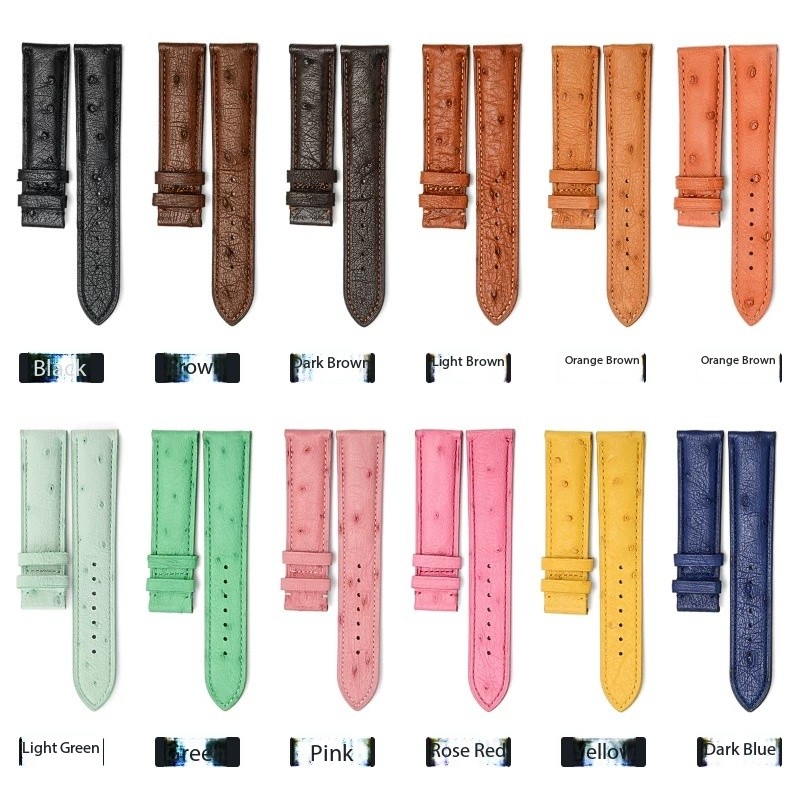
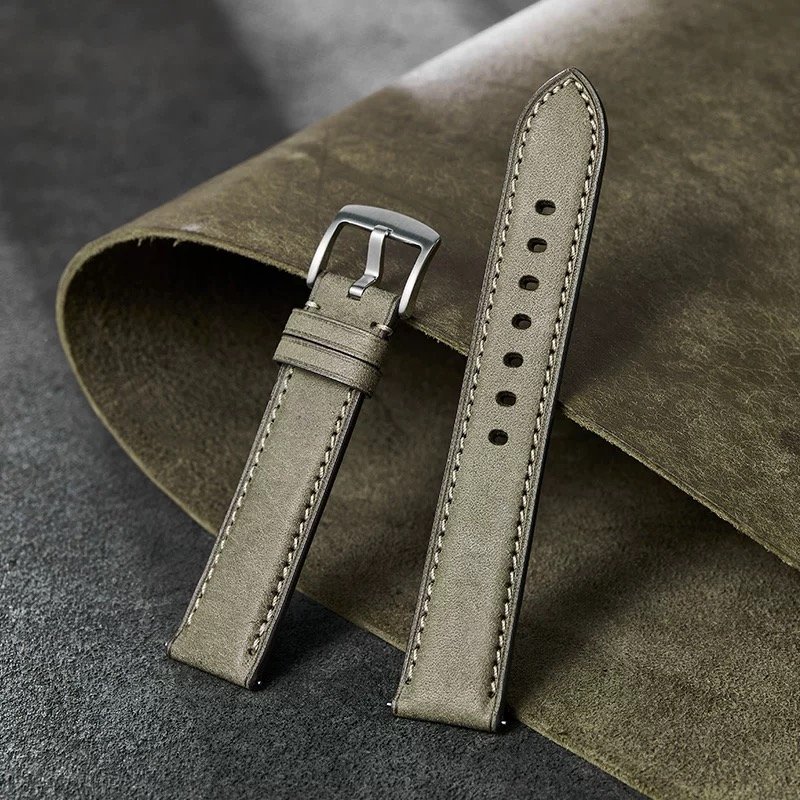
Article Summary:
Plain grain leather is commonly employed in the manufacturing of watch straps because of its combination of durability, aesthetics, and cost efficiency. According to Thornton’s The Leather Dictionary and Covington’s Tanning Chemistry, bare-root leather is unable to maintain the original surface of the hide during the process of controlled aging, resulting in a loss of uniformity and a decrease in resistance to wear.
The composition of the leather, as well as the density of fibers, directly affects the comfort, long life, and aging behavior of aging in watch straps. For the common grain حزام ساعة جلدي, this article discusses the specifics of the industry, including whether or not common grain leather is a good option for a watch strap, and when it is beneficial to use it.
Introduction: Why the choice matters in watch straps
For those who enjoy watches, manufacturers, and business people alike, a watch strap is more than just a decorative accessory. It’s an interface that functions to couple the timepiece to the wearer’s skin.
From a business perspective, understanding this distinction is crucial, specifically for brands that produce large quantities of watch straps that have a middle to high degree of popularity; the importance of consistency in performance and the control of costs is paramount.
What is plain grain leather?
Plain grain leather is characterized by a natural grain layer that is retained, but the layer is overly smoothed out to improve consistency, appearance, and resistance to small imperfections. Contrasting with the heavily altered leather, the grain-based leather retains the fiber composition that gives strength and flexibility.
In the manufacturing of watch straps, the common grain of leather is in a middle ground between untreated full-grain leather and highly refined or split leather.
The most common traits of regular grain leather are:
- Whole-grain layer
- Light polishing or drying
- Increased surface smoothness
- Increased resistance to staining and wear
These traits make it a popular and practical material for manufacturing watch straps.
Understanding leather grain and fiber structure
Why is the layer of grain important?
The leather science literature describes the grain layer as containing the densest and strongest collagen fibers in the hide. This design offers both tensile strength and elasticity, two important properties of watch straps that are required to repeatedly flex without breaking.
Plain grain leather continues to have this structural advantage while also decreasing the visual discrepancies that are sometimes disregarded in large volume watch straps.
Plain grain leather vs other leather types for watch straps
- Grain-based leathers and synthetic leathers with a full-grain design.
Full-grain leather includes all of the natural surface features, including imperfections and variations. While value for authenticity and aging properties is recognized, it’s also less common in appearance and performance.
Contrasting, the plain grain leather provides:
- More even coloring
- More consistent production volume
- A little more resistance to moisture and oils
For watch manufacturers that specialize in straps, this equilibrium is often beneficial for the selection of grain leather as a material for the industry.
- Grain that is plain and top, respectively
The words “plain” and “top” are occasionally used synonymously in consumer publications. However, from a commercial perspective, plain grain leather is typically less affected by correction than standard top grain leather, which leads to a greater retention of natural fiber quality.
This distinction has an effect on both the durability and feel of the material, particularly in thin components of leather that are used in the design of watch straps.
- Grainy land vs. genuine leather
“Genuine leather” is a general term that encompasses lower portions of the hide or re-derived materials. Compared to a genuine leather, a plain design leather watch strap has a longer lifespan, is more comfortable, and has a more aesthetic appeal.
Why is plain grain leather commonly used in watch straps?
- Robustness under repeated bending
Watch straps have constant pain points near the lugs and buckles that experience constant flexing. The study of material performance suggests that leathers that have their entire grain layers preserved have a more effective resistance to fiber destruction.
The preserved structure of grain in leather is ideal for this type of motion.
- Skin and comfort interaction
Leather-based watch straps should remain flexible during extended use. Plain grain leather, when tanned and finished, maintains its breathability while decreasing the surface’s roughness that can cause skin irritation.
This equilibrium is frequently re-emphasized in top-rated reviews and purchasing guides.
- Aging and patina control
Unlike untreated full-grain leather, which has a tendency to develop a rich patina, plain-grain leather is more evenly aged. Many consumers, especially those in professional or high-end contexts, find this typical aging process to be more desirable.
Manufacturing considerations for plain grain leather watch straps
- Thickness and division
Watch straps need to have precise thickness regulation. Plain grain leather is capable of being sliced into a consistent thickness without negatively impacting the surface quality. This is an important attribute in large production.
- The ability to finish the edge and have a high degree of stitching quality
Plain grain leather is ideal for edge painting, burning, and stitching. Its composition of fibers enables the creation of clean stitch holes and strong retention of thread, which improves the longevity of straps.
Table: Comparison of leather types for watch straps
|
Leather Type |
متانة | Appearance Consistency | Aging Behavior | Cost Level |
|
الجلود والحبوب الكاملة |
عالي جدًا |
منخفض |
Strong patina |
عالي |
|
Plain grain leather |
عالي | عالي | Even aging |
متوسط |
| جلد محبب | متوسط | عالي جدًا | Minimal patina |
متوسط |
| جلدية حقيقية | منخفض | Variable | Poor aging |
منخفض |
Performance of plain grain leather in daily wear
- Moisture and sweat resistance
While no leather is completely waterproof, common grain leather often has a protective finish that increases its resistance to sweat and humidity. This is of great importance to the design of daily wear’s straps.
- Preservation of shape and deformation
Plain grain leather is more favorable for retaining shape than split leather or other materials that are bonded. This facilitates the prevention of strap buckling and malformations at the wrist.
Plain grain leather in luxury vs commercial watch straps
Luxury brands often choose full-grain or exotic leathers for special models, while using high-quality common-grain leather for the everyday kind. This strategy balances the perceived value with the long-term viability.
In popular and private-label wristbands, regular grain leather is typically used because of its capacity to be scalped and its reliability.
حزام ساعة جلد محبب عادي: Sustainability and Sourcing Considerations
- Source of raw materials
Grain leather that is not decorated is derived from animal skins, typically cowhide.
Sustainable sourcing involves ensuring ethical animal farming, which involves the production of hides as byproducts of the meat industry; this diminishes waste.
High-end suppliers often have a track record of authenticity; they certify the leather’s origin.
Key point: Selecting suppliers with ethical, transparent sourcing reduces environmental and ethical concerns.
- Tannery and Chemical Exposure
Leather tanning has a significant environmental impact if not conducted with care.
Traditional chrome tannin involves the use of toxic metals, which should be properly released.
Vegetable tanning employs natural tannin derived from plants; this has a lower environmental impact and is biodegradable.
Thinking: brands can focus on methods of tanning that have a low impact to reduce the chemical pollution caused by chemicals.
- Robustness and longevity
Plain leather for the grain is extremely durable, which increases the lifespan of watch straps.
Products that have a longer lifespan reduce the frequency of replacement, which decreases the consumption of resources over time.
Sustainability gain: Leather investments increase the environmental sustainability of the company.
- Reduction of waste
Effective leather utilization and minimizing wasted material are crucial to sustainability.
Some manufacturers take recycled material from off-cuts and use it to make accessories or smaller goods.
Tip: Look for brands that maximize the amount of material used to reduce waste.
- End-of-life Considerations
Plain grain leather is environmentally friendly if not treated with harmful finishing.
Fully synthetic coatings or harsh chemical treatments may impede the process of decomposing.
Best practice: Select leather belts that have minimal coating or an environmentally friendly design in order to have a longer lifespan.
- Certificates and Accountable Practice
The Leather Working Group (LWG) certification protocol guarantees environmentally responsible production of leather.
The OEKO-TEX certification system is used to indicate the safety of chemical compounds in leather products.
Verifiable and legitimate leather advocates ethical procurement and regulatory compliance.
Consumer takeaway: Certifications facilitate the verification of sustainability claims.
- The behavior of consumers affects the market
Promoting proper care ( cleaning, conditioning) increases the lifespan of the strap.
Recommending repairs over the course of a single iteration decreases the environmental impact of the process.
Sustainability advice: Educate users on how to maintain the product.
Common misconceptions about plain grain leather watch straps
Selecting the wrong artist’s paper can adversely affect the technique, harm the artwork, or shorten its lifespan. Below, you will find the most common errors that artists commit when choosing artist paper, as well as the reasons why they are important.
- Ignoring the Medium Density of the Terrain
One of the greatest errors is employing paper that is not intended for the selected medium.
Watercoloring on thin paper that is intended for drawings leads to warping and tears.
The ink on the absorbent paper is responsible for the feathering and blood flow.
The significance of the problem: The formulation of the paper affects the behavior of pigments, ink, or graphite.
- Selecting Paper Based on Price Alone
Low-priced paper may seem to be an attractive option, but it often lacks the proper size and sturdy quality.
Colors seem to have lost their shine or are inconsistent
Paper becomes yellow or degrades over time
The importance of the problem: Poor quality paper can adversely affect the appearance and longevity of art.
- Being Overlooked by the Paper’s Weights and Thickness
Using paper that is too thin for damp media is a common error.
Buckling and rippling are simple to accomplish.
Multiple layers become complicated
The reason is important: Heavier paper (with a higher GSM) has greater stability and control.
- Understanding the surface’s texture (Tooth)
Selecting the wrong type of texture can impede the technique.
Too consistent for debate or argument.
Not sharp or detailed enough for the fine pen or permanent ink.
The reason is important: the surface tooth controls the amount of pigment that adheres to the tooth and the clarity of the mark.
- Assuming that all of the “Artist Paper” is historically relevant
Not all of the papers associated with artists are free of acid or have historical value.
Lignin-based paper yellowed over time.
Artworks may break more easily
Why it’s important: For professional or commercial projects, the importance of archival standards is paramount.
- Avoiding Paper Examinations
Many artists take an oath on paper that they will never deviate from, but this is not true.
Absenteeism
Disparate results between submissions.
The reason is important: Testing promotes the avoidance of مفاجئة in the final artwork.
- Ignoring the Sizing and Absorbency
The process of sizing paper affects the way paint and other materials on the surface interact.
Over-absorbent paper is responsible for colorful results.
Poor size causes blotting.
Why it’s important: Effective sizing promotes control, layering, and hygienic edge placement.
- Selecting the Incorrect Paper Colour
White isn’t always the most appropriate color.
Bright white may appear too harsh.
Warm or faded paper would enhance the mood.
The significance of the papermaterial: The color of the paper affects the contrast, depth, and emotional impact.
- Anticipating One Article that Copes with All Methodologies
No single article is perfect for every medium.
Many media types are best suited to specific types of paper.
Technique-specific articles produce more effective results.
The importance of the item: Purpose-designed paper increases both the efficiency and the result.
- The importance of consistency and the necessity of brand reliability
Frequent switching of brands can lead to erratic results.
Variations in size and texture
The color of the batch may change.
The reason is important: professionals appreciate the consistency of quality that is repeatable.
Frequently Asked Questions (FAQ)
Q1: Is standard grain leather appropriate for straps with watches?
Yes. Plain grain leather has a remarkable combination of durability, comfort, consistency in appearance, and cost, which is ideal for wear with a watch.
Q2: What is the difference between plain and full-grain leather regarding watch straps?
Plain-grain leather has a more consistent appearance and predictable aging, while full-grain leather focuses on the natural characteristics and patina.
Q3: Is it easy to break apart the grain of leather?
No. When properly aged and cared for, common grain leather is more resistant to cracking than split or bonded leather.
Q4: Is the ordinary grain of leather appropriate for daily wear?
Yes. Its resistance to moisture, flexibility, and shape retention are ideal for everyday use.
Q5: How should I maintain a neutral-colored grain leather watch band?
Regular cleaning with a dry cloth, limited moisture exposure, and occasional conditioning will increase its lifespan.
Conclusion: Is plain grain leather a good choice for watch straps?
Is genuine leather good for making straps for watches? From both a professional and consumer perspective, the response is obviously yes. Plain grain leather has a combination of structural integrity, comfort, consistency in terms of visual design, and efficiency in manufacturing, all of which are properties that fit well with the functional requirements of watch straps.
While full-grain leather is primarily intended for purists and collectors who want a high-end, practical alternative to the real world, plain-grain leather is ideal for everyday use and performance. As documented in authoritative literature and reflected in the highest ranking search results, plain grain leather is still one of the most popular and trusted materials in the production of modern straps for watches.