Abstract:
Material durability, tensile performance, and ergonomic wearability are central factors in wristwatch strap engineering.
Based on the principles of polymer science described in “Polymer Science and Technology” by Joel R. Fried, woven synthetic fibers like nylon provide high tensile strength. They also exhibit abrasion resistance, moisture tolerance, and dimensional stability under changing environmental conditions.
Military field equipment standards have traditionally preferred nylon webbing due to its ability to bear loads effectively and dry quickly. These engineering benefits established the basis for the contemporary one-piece nylon watch straps zulu watch band design—an all-in-one strap system recognized for its dependability, safety, and versatility.
This detailed 2026 guide examines the technical construction, structural mechanics, material composition, hardware design, performance benchmarking, historical evolution, manufacturing processes, durability testing, aesthetic positioning, and procurement considerations of one-piece nylon watch straps and Zulu watch band systems.
This guide delivers a deeper technical and commercial analysis, offering authoritative insight for informed selection and long-term value evaluation.
Introduction: Why One Piece Nylon Watch Straps and Zulu Watch Band Systems Matter in 2026
The contemporary watch industry is no longer characterized only by mechanical movements or dial design. The design of straps has gained equal significance in influencing durability, comfort, brand image, and user experience. Of the various strap types available today, the one-piece nylon watch strap, known as the zulu watch band, is notable for its straightforward structure and outstanding security.
Traditional two-piece leather or metal bracelet systems depend on spring bars as their main load-bearing parts. In contrast, one-piece nylon configurations loop under the watch case, providing an extra layer of attachment. This design guarantees that if a spring bar breaks, the watch still stays securely on the wrist.
In 2026, consumer priorities emphasize:
- Durability in outdoor conditions
- Sweat and water resistance
- Lightweight wearability
- Military-inspired aesthetics
- Tool-watch compatibility
The one-piece nylon watch straps, zulu watch band category satisfies all of these criteria while remaining cost-efficient and adaptable across watch styles.
What Is a One Piece Nylon Watch Strap Zulu Watch Band?
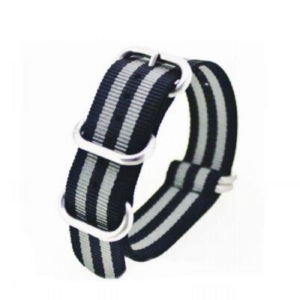
A one-piece nylon watch straps zulu watch band, describes a single, continuous woven nylon strap that goes underneath the watch case and connects with sturdy hardware rings, usually having a thicker build and rounded metal keepers compared to other strap types.
Key defining features include:
- A single, continuous nylon strip
- Heavy-duty stainless steel hardware
- Multiple adjustment holes
- A secure buckle closure
- An under-case looping design
This design offers improved security and even weight distribution on the wrist.

Historical Origins and Military Influence
The design philosophy behind one-piece nylon watch straps originated from military field requirements. Armed forces demanded straps that could be replaced without tools and were durable under extreme conditions.
Resistant to water and mud
Secure during physical activity
The Zulu variant evolved as a heavier-duty alternative, featuring thicker nylon and rounded metal hardware rings for increased strength.
Material Science Behind Nylon Webbing
Nylon (polyamide) provides multiple material benefits:
- It has high tensile strength.
- It exhibits excellent abrasion resistance.
- It offers elastic recovery.
- It is resistant to oils and chemicals.
- It absorbs less moisture than natural fibers.
From a polymer chemistry perspective, nylon’s amide linkages contribute to intermolecular hydrogen bonding, enhancing mechanical performance.
Material Comparison – Nylon vs Leather vs Stainless Steel
|
Property |
Nylon Strap | Leather Strap | Steel Bracelet |
|
Water Resistance |
Excellent | Poor | Excellent |
|
Weight |
Light | Moderate |
Heavy |
| Flexibility | High | Moderate |
Low |
| Maintenance | Low | High |
Moderate |
| Outdoor Durability | High | Low |
High |
Structural Engineering of Zulu Watch Bands
The main distinction in engineering between standard one-piece nylon straps and Zulu bands is in the hardware and thickness. Zulu-specific features include a thicker nylon weave, usually between 1.4 and 1.6mm, and rounded heavy-duty stainless steel rings.
Reinforced stitching
Greater load-bearing capacity
The rounded hardware reduces sharp edges, minimizing strap wear and increasing longevity.
How the One-Piece Design Enhances Security?
Security is among the most compelling advantages of a one-piece nylon strap.
- Redundant Retention System
In contrast to conventional two-piece straps:
- The strap passes beneath both spring bars.
- If a single spring bar fails, the watch head stays attached.
- The watch is less likely to slip off the wrist easily.
This redundancy greatly diminishes the risk of dropping.
- Multi-Ring Reinforcement
Zulu watch bands generally feature:
- 3-ring or 5-ring setups
- Thick-welded stainless steel rings
- Heavy-duty buckles
Zulu hardware is thicker and more robust than lighter NATO-style rings, which increases load capacity.
- Continuous Wrist Anchoring
Since the strap forms a single loop:
- Stability is improved through even tension distribution.
- The watch head shifts less during movement.
- Suitable for outdoor, sports, and field use.
For tactical or active environments, this structure enhances reliability.
Security Comparison
|
Feature |
Two-Piece Strap | One Piece Nylon Watch Straps Zulu Watch Band |
|
Spring Bar Redundancy |
No | Yes |
| Shock Distribution | Limited |
Enhanced |
| Risk of Drop | Higher |
Lower |
| Field Replacement | Moderate |
Easy |
Manufacturing Process
Understanding manufacturing helps evaluate quality differences between low-cost and premium straps.
- Nylon Yarn Selection
Common materials include ballistic nylon, high-tenacity woven nylon, and seatbelt-style nylon with a smooth weave.
Using higher-denier yarn enhances tensile strength, abrasion resistance, and longevity.
- Weaving Process
Two common weaving styles are traditional woven nylon, which has a slight texture, matte finish, and rugged aesthetic, and seatbelt weave, characterized by a smooth, dense structure, slight sheen, and softer feel against the skin.
The weaving density influences flexibility and durability.
- Edge Sealing and Heat Treatment
Edges are usually laser cut, heat sealed, or ultrasonically fused.
Poor sealing causes fraying over time.
- Hardware Installation
High-quality Zulu bands feature:
- Solid stainless steel rings
- Brushed or PVD-coated hardware
- Welded or seamless ring joints
Inferior hardware might bend or corrode.
Thickness and Comfort Considerations
Thickness is a key feature of Zulu straps.
- Thickness Range
Typical thickness:
- 1.2 mm → Lightweight
- 1.4–1.6 mm → Standard Zulu
- 1.8 mm+ → Heavy-duty tactical
Thicker straps:
- Provide a stronger wrist presence
- Enhance durability
- May initially feel stiff
- Wrist Comfort
Comfort depends on:
- Weave softness
- Edge finishing
- Hardware placement
- Strap flexibility
Seatbelt-style nylon enhances:
- Skin comfort
- Friction reduction
- Better drape on smaller wrists
- Case Height Impact
Since the strap passes beneath the watch:
- It slightly raises the case height.
- It may influence low-profile dress watches.
- Ideal for sports and tool watches.
Aesthetic Versatility and Brand Positioning
Zulu straps are not just functional — they also make style statements.
- Color and Pattern Options
Available in:
- Solid military tones (black, olive, navy)
- Stripe patterns
- Vintage-inspired palettes
- Custom brand colors
They enable brands to express their identity affordably.
- Rugged vs Refined Positioning
Matte woven Zulu:
- Tactical
- Adventure-oriented
- Tool-watch aesthetic
Seatbelt nylon:
- Modern
- Urban lifestyle
- Smart casual appeal
- Private Label Potential
Brands can stand out through:
- Custom hardware engraving
- Unique colorways
- Branded buckle designs
- Sustainable packaging
Low MOQ production makes Zulu straps appealing for microbrands.
Style Compatibility Guide
|
Watch Type |
Compatibility Level | Recommended Strap Width |
|
Dive Watch |
Very High | 20mm–22mm |
|
Field Watch |
Very High |
18mm–20mm |
| Dress Watch | Moderate |
Slim variant |
| Chronograph | High |
20mm–22mm |
Durability and Environmental Resistance
Nylon excels in performance environments.
- Abrasion Resistance
High-quality nylon resists:
- Surface wear
- Fraying
- Daily friction
Ideal for outdoor and sports use.
- Water Resistance
Nylon:
- Dries quickly
- Resists mildew
- Performs well in humid conditions
Suitable for swimming and sweat exposure.
- UV Resistance
Prolonged sun exposure may cause:
- Color fading
- Slight stiffness changes
Premium dyes and UV-treated yarn improve longevity.
- Temperature Performance
Nylon performs well in:
- Cold conditions (flexible)
- Warm climates (breathable)
Unlike leather, it does not crack from moisture.
Maintenance and Care
Proper care can prolong the lifespan.
- Cleaning
It is recommended to hand-wash with mild soap.
Rinse with warm water.
Let air dry, avoiding high heat.
Harsh detergents should be avoided.
- Odor Prevention
After sports use:
- Rinse promptly.
- Allow it to dry completely.
- Do not store when damp.
Nylon resists odor better than leather but still needs care.
- Hardware Care
For stainless steel hardware:
- Wipe it after exposure to saltwater.
- Avoid using abrasive polishing.
- Check for ring deformation
OEM and Wholesale Market Trends in 2026
The 2026 market trends include:
- Sustainable recycled nylon options
- Custom hardware engraving
- Low-MOQ OEM production
- Private label branding
- Anti-microbial coatings
Manufacturers increasingly emphasize sustainable sourcing.
Cost vs Performance Evaluation
High-quality one-piece nylon watch straps, zulu watch band products provide:
- Lower lifetime cost
- Greater durability
- Versatile styling
- Reduced maintenance expenses
Premium hardware quality often distinguishes professional-grade straps from entry-level products.
Price Tier Comparison
|
Tier |
Material Quality | Hardware | Expected Lifespan |
|
Budget |
Basic nylon | Standard steel | 6–12 months |
| Mid-Range | Dense weave | Brushed stainless |
1–3 years |
| Premium | High-tensile nylon | 316L stainless |
3–5+ years |
Common Buyer Mistakes
Avoid these common mistakes:
- Mistake 1: Overlooking Thickness Compatibility
Thick Zulu straps might not fit:
Tight lug gaps
Low-clearance spring bars
Always verify lug spacing.
- Mistake 2: Ignoring Hardware Quality
Inexpensive welded rings can:
Bend under pressure
Rust over time
Jeopardize safety
- Mistake 3: Prioritizing Style Over Wrist Size
Very thick straps can overpower:
Smaller wrists
Slim watch cases
Carefully consider proportion.
- Mistake 4: Mixing Up NATO and Zulu
Zulu:
Thicker nylon
Rounded, heavy-duty rings
NATO:
Thinner nylon
Flat hardware
Knowing the difference prevents mismatched expectations.
- Mistake 5: Believing All Nylon Is the Same
Differences exist in:
Weave density
Yarn quality
Dye stability
Edge finishing
Low-cost straps may deteriorate quickly.
FAQ Section
- What makes a Zulu watch band different from other nylon straps?
Zulu bands use thicker nylon and rounded heavy-duty hardware rings for enhanced durability.
- Are one-piece nylon watch straps secure?
Yes, the loop-under design provides redundancy if one spring bar fails.
- Can nylon straps be used for diving?
Yes, they resist water and dry quickly.
- Do nylon straps cause skin irritation?
High-quality nylon is generally skin-friendly and breathable.
- How long do Zulu watch bands last?
Premium variants can last several years with proper care.
Conclusion
The one-piece nylon watch straps, zulu watch band, are a highly functional, durable, and versatile strap system designed for security, comfort, and long-term performance. It integrates advanced polymer material science with practical structural design, providing benefits in load distribution, environmental resistance, and aesthetic flexibility.
In 2026, choosing the appropriate strap requires assessing weave density, hardware material, thickness, UV resistance, stitching integrity, and manufacturing quality control.
Whether for OEM sourcing, retail distribution, or personal use, understanding these technical and commercial aspects allows for more informed purchasing choices and enhanced brand positioning.