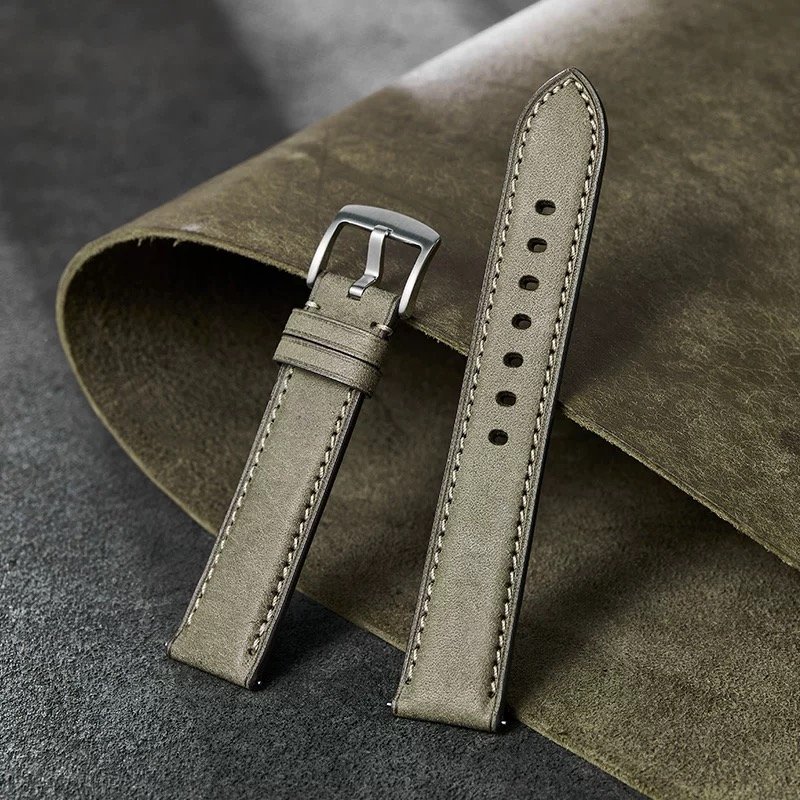
Cow leather watch straps are meticulously crafted from top- and split-grain cowhide, supplemented by lining, stitching, and metal buckles. Their premium texture and breathability make them ideal for both business and leisure use. Proper wear and maintenance can significantly extend their lifespan. If you’re interested in cow leather watch straps, please visit Aiming for more information.
What is a cow leather watch strap?
A cow leather watch strap is a watch accessory made primarily from natural cowhide. It’s widely used in mechanical and quartz watches, as well as the more recently popular smartwatches. It combines both functionality and decorative qualities, not only providing a secure connection between the watch case and clasp, but also showcasing the wearer’s personality and taste through its varying colors, textures, and craftsmanship.
Compared to metal and silicone watch straps, cowhide’s greatest strengths lie in its warmth and personalization. As a natural material, cowhide develops a unique patina and texture over time, a quality that many watch enthusiasts find so appealing.
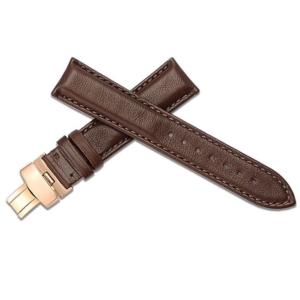
Introduction to cow leather watch strap Materials
The material of a cow leather watch strap determines its appearance, feel, and lifespan. Common materials include:
Top-grain cowhide
Originally derived from the outermost layer of cowhide, it features a dense fiber structure, excellent wear resistance, and excellent breathability. With its visible natural grain and soft, flexible feel, it’s a common material for high-end watch straps. Split cowhide leather
Comes from the inner layer of cowhide and undergoes coating, embossing, and other processes to create an appearance that mimics top-grain leather or even crocodile patterns, though its durability is slightly lower. Its advantage is its low cost and high value.
Vegetable-tanned leather
Processed using vegetable tanning agents, it is environmentally friendly and gradually changes color over time, creating a unique “aged effect,” making it suitable for those who appreciate a vintage look.
Calf leather
Comes from young cattle, boasts a fine grain and a soft touch, and is often used in high-end watch straps from luxury brands.
Are cow leather watch straps good?
The quality of a cow leather watch strap often depends on the environment and personal needs. In terms of wear, it fits snugly on the wrist and is highly breathable, making it particularly suitable for daily commuting and formal occasions. Compared to metal watch straps, it is lighter and less likely to cause wrist fatigue.
Aesthetically, cow leather watch straps have a natural grain and a variety of colors, making them easy to coordinate with different outfits. Many people appreciate the way cow leather watch straps “become more refined with wear,” as the leather develops a unique patina through friction and sweat. Of course, its downside is its resistance to water and sweat. Frequent exercise or prolonged use in humid environments can easily cause it to deform or crack.
Cow leather watch strap Production Process
Making a high-quality cow leather watch strap requires several complex steps:
Material Selection: Selecting cowhide with uniform texture and no obvious defects.
Cutting: Cutting the raw material to the desired size and shape.
Tanning: Chrome or vegetable tanning is used to enhance its suppleness and durability.
Forming: Using hot or cold pressing techniques to achieve a uniform thickness and maintain a stable shape.
Stitching: Hand or machine stitching is used for added strength and decorative effect.
Coloring and Coating: Dyeing, waterproofing, or waxing the surface enhances its appearance and longevity.
Assembling: Adding the buckle and spring bar ensures a secure connection between the strap and the case.
High-end brands often insist on hand-stitching, with every stitch imbued with the meticulous care and experience of the artisans.
What styles and colors are available for cow leather watch straps?
Cow leather watch straps offer a variety of designs to suit different aesthetic preferences.
Style Categories:
Flat Style: Simple and elegant, suitable for business watches.
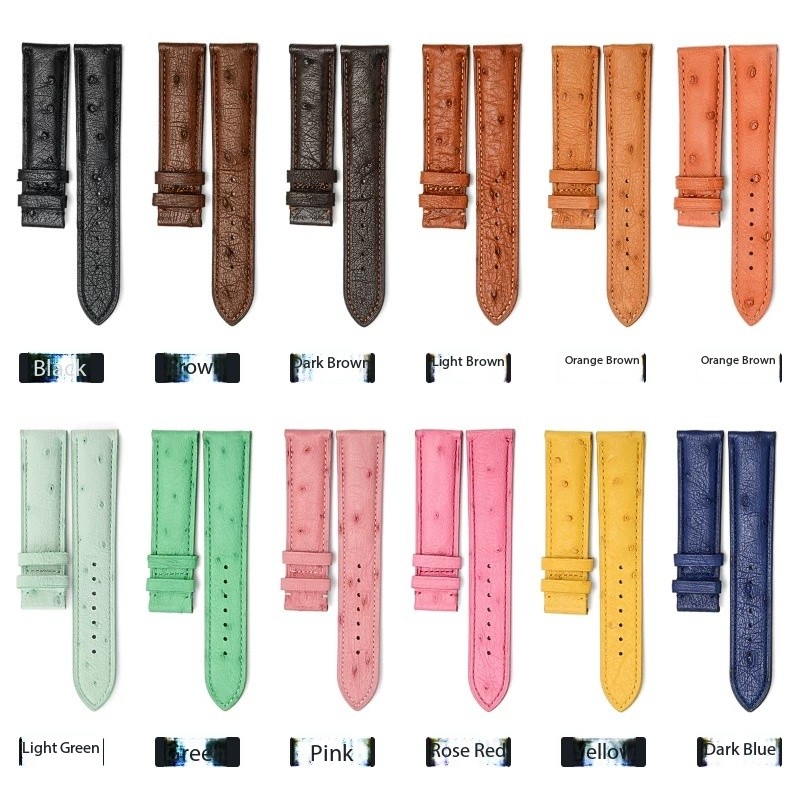
Embossed Style: Emulates the texture of animal skins like crocodile and lizard, adding a touch of luxury.
Stitched Style: Adds a layered look with contrasting stitching.
Vintage Style: Uses vegetable-tanned leather or distressed finishes for a natural, raw look.
Sports Style: Thicker and features ventilation holes.
Color Options:
Black, dark brown, and coffee are classic and versatile colors. In recent years, blue, burgundy, green, and even gradient colors have become increasingly popular, catering to the personalized needs of younger watchmakers.
Are cow leather watch straps universally compatible?
The compatibility of a cow leather watch strap depends on the width of the lugs (common sizes include 18mm, 20mm, and 22mm).
As long as the lugs are the same size, most cow leather watch straps are interchangeable. However, please note: some smartwatches (such as the Apple Watch) use proprietary connectors and require a dedicated adapter or custom strap.
Comparison of Cowhide Straps vs. Other Straps (Silicone, Metal)
Cowhide straps: Lightweight, breathable, comfortable, and stylish, but lacking in water resistance.
Silicone straps: Soft, sweat-resistant, and waterproof, suitable for sports and outdoor use, but can appear casual.
Metal straps: Sturdy and durable, suitable for business and formal occasions, but heavy and can be stuffy in the summer.
Overall, cowhide straps are ideal for everyday and business wear, while silicone and metal straps are more functional and durable.
Are cowhide straps durable?
High-quality, top-grain cowhide straps typically last 23 years with proper use and care. Frequent exposure to sweat or moisture can shorten their lifespan to around one year. In contrast, metal straps can last over 10 years, while silicone straps last about 12 years.
Are cowhide straps water-resistant?Can you wear them swimming?
Cow leather watch straps are indeed sensitive to water. Moisture can damage the leather’s fiber structure, causing it to become stiff, wrinkled, or even break.
Therefore, it’s not recommended to wear a cow leather watch strap while swimming, showering, or in a humid environment for extended periods.
If the watch strap accidentally gets wet, wipe it dry immediately and place it in a cool, well-ventilated area to air dry. Avoid direct sunlight or hair dryers.
Are cow leather watch straps allergenic?
Most natural cowhide is skin-friendly, but the use of chromium-containing chemical tanning agents during processing may cause skin allergies in some people. Those with sensitive skin are advised to choose vegetable-tanned cow leather watch straps, which are more environmentally friendly and safer.
How to choose a good cow leather watch strap?
When choosing a cow leather watch strap, consider the following:
Material grade: Top-grain cowhide or calfskin is preferred.
Workmanship: Observe the stitching for evenness and smooth, burr-free edges.
Comfort: When trying it on, ensure it fits snugly on your wrist, leaving no noticeable marks.
Brand and reputation: Established brands offer greater assurance of quality in both raw materials and craftsmanship.
Matching the scene: For business watches, we recommend black or brown; for casual watches, try bright colors or color-blocking.
How to protect cow leather watch strap?
Avoid contact with water, sweat, and chemicals.
Store in a dry, ventilated place when not worn for extended periods.
Wipe regularly with a clean, soft cloth to keep the surface clean.
Lightly apply a professional leather care oil to enhance softness and luster.
Cow leather watch strap Market Size and Development Trends
With the younger consumer base, demand for cow leather watch straps is growing year by year. Consumers are increasingly concerned about personalization, comfort, and environmental protection. Several clear trends are emerging:
The rise of eco-friendly materials: Green materials such as vegetable-tanned leather and recycled leather are gaining popularity.
Increasing demand for customization: Consumers desire exclusive colors and textures.
Integration with smartwatches: More and more brands are offering cowhide strap options for smartwatches.
Cross-border design: Fashion brands are collaborating with watch strap manufacturers to launch co-branded products to cater to the trendsetting market.
Cow leather watch straps are expected to have greater growth potential in the high-end and customized markets in the coming years.
Conclusion
Cow leather watch straps stand out among other watch strap materials due to their comfort, style, and unique “growth effect.” They meet the formal demands of business settings while also allowing for personal expression through a variety of styles and colors. While they may have limitations in terms of water resistance and sweat resistance, with proper selection and proper care, cow leather watch straps remain an indispensable and classic choice for watch enthusiasts.