The date is an essential piece of information in our daily lives, determined through complex calendrical calculations. When a joyful Sunday ends and turns into Monday, the first day of each month does not necessarily follow the 30th or 31st. For example, March 1st comes after February 28th in common years, while in leap years, it follows February 29th.
In horology, the perpetual calendar is considered one of the three most complicated watch functions, alongside the tourbillon and the minute repeater. A year has 365 days divided into 12 months: seven months with 31 days, four months with 30 days, and February with either 28 or 29 days.
1. Calendar
A standard calendar watch can only display the date but cannot distinguish between months of different lengths. As a result, at the end of months with fewer than 31 days, the wearer must manually adjust the date—for example, from February 28th or 30th to the 1st of the next month.
2. Annual Calendar
An annual calendar watch takes functionality a step further by automatically distinguishing between months with 30 and 31 days. However, it still cannot account for the irregularity of February, meaning that it requires a manual adjustment at the end of February each year.
3. Perpetual Calendar
The perpetual calendar solves this problem perfectly. It can recognize February 28th and automatically advance to March 1st, while also accurately accounting for leap years by correctly transitioning from February 29th to March 1st every four years. As long as the watch remains running, a perpetual calendar will require no manual date adjustments until the year 2100 (as 2100 is not a leap year, manual correction will be needed).
Date and Day Display
Unlike the date, the weekday is relatively simple, as it follows a consistent seven-day cycle without any variation. Different watches use various formats to display the date and day of the week, such as window displays or pointer indications. Traditional date displays use a date window or an indicator hand on a circular scale, while some watches feature a retrograde pointer to show the date.
Quadrennial Calendar (Also Known as Small Perpetual Calendar)
The quadrennial calendar can calculate the length of each month, distinguish between months with 30 and 31 days, and correctly skip from February 28th to March 1st. However, it cannot recognize leap years, meaning that every four years, the wearer must manually adjust the date on February 29th.
Design Features of the Perpetual Calendar
Most perpetual calendar watches feature month and leap year indicators, while only a few models also display the year—likely because designers assume that people seldom need to check the year on their watch. Additionally, most perpetual calendars include a subdial divided into four sections to indicate whether the current year is a leap year, often marking the leap year with a red “4” or “L” (for Leap Year).
In conclusion, the perpetual calendar is a masterpiece of watchmaking, capable of automatically recognizing the date, month, and leap years with little to no manual adjustment. This makes it a true “eternal calendar” in horology.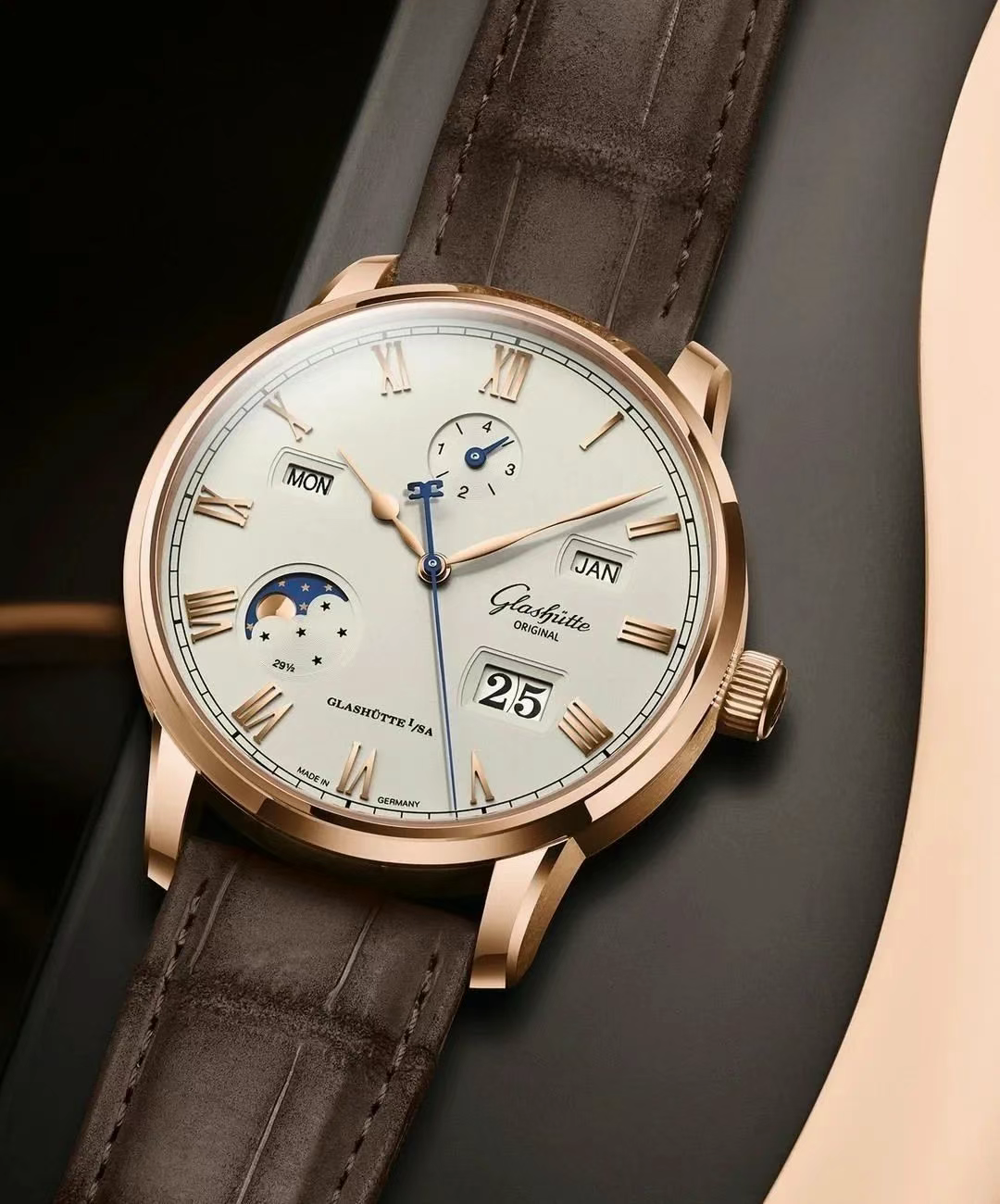

Related Products